


Have you ever noticed how chatting online feels a bit like catching up with a close friend? Early on, simple text messages set the stage for playful hangouts that slowly got a fun, flashy update. What began as plain notes on bulletin boards has burst into lively spaces loaded with cool icons, videos, and real-time chats. Every upgrade has lit up our screens and warmed our hearts along the way. Keep reading to see how each change has turned our digital convos into the sparkling experience we love today.
Star Chat Format Evolution: A Comprehensive Timeline
Have you ever wondered how our online chats got so lively? Back in the day, when digital conversations were nothing but plain text on bulletin board systems, users relied on simple, command-line messages. Those early exchanges, simple as they were, set the stage for building interactive online communities that felt a bit like a secret club.
Then came the tech upgrades. Soon, real-time public chat rooms and graphic interfaces turned our digital interactions into immersive experiences. Think of AOL Instant Messenger’s playful speech-bubble design, each little upgrade, like incorporating peer-to-peer video chats and synchronized overlays, made online interaction feel more like a fun hangout with friends.
| Year | Platform | Defining Feature |
|---|---|---|
| 1980 | BBS | Simple text message threads |
| 1988 | IRC | Real-time public chat rooms |
| 1996 | AOL Instant Messenger | Playful speech bubbles and buddy lists |
| 1999 | MSN Messenger | Inline file sharing and basic emoticons |
| 2003 | Skype | Face-to-face video chats |
| 2004 | Facebook Chat | Real-time, web-based messaging |
| 2009 | Seamless mobile texting across platforms | |
| 2013 | Slack | Team arenas with integrated tools |
| 2015 | Discord | Organized server channels |
| 2020 | TikTok Live | Live-synced comment overlays |
Each of these innovations has mixed a little of that old-school simplicity with modern flair. Today’s chat experiences are not just about sending messages, they’re about sharing a vibe, connecting in vibrant, engaging ways, and really feeling the buzz of digital life.
Early Text-Based Star Chat Formats and Design
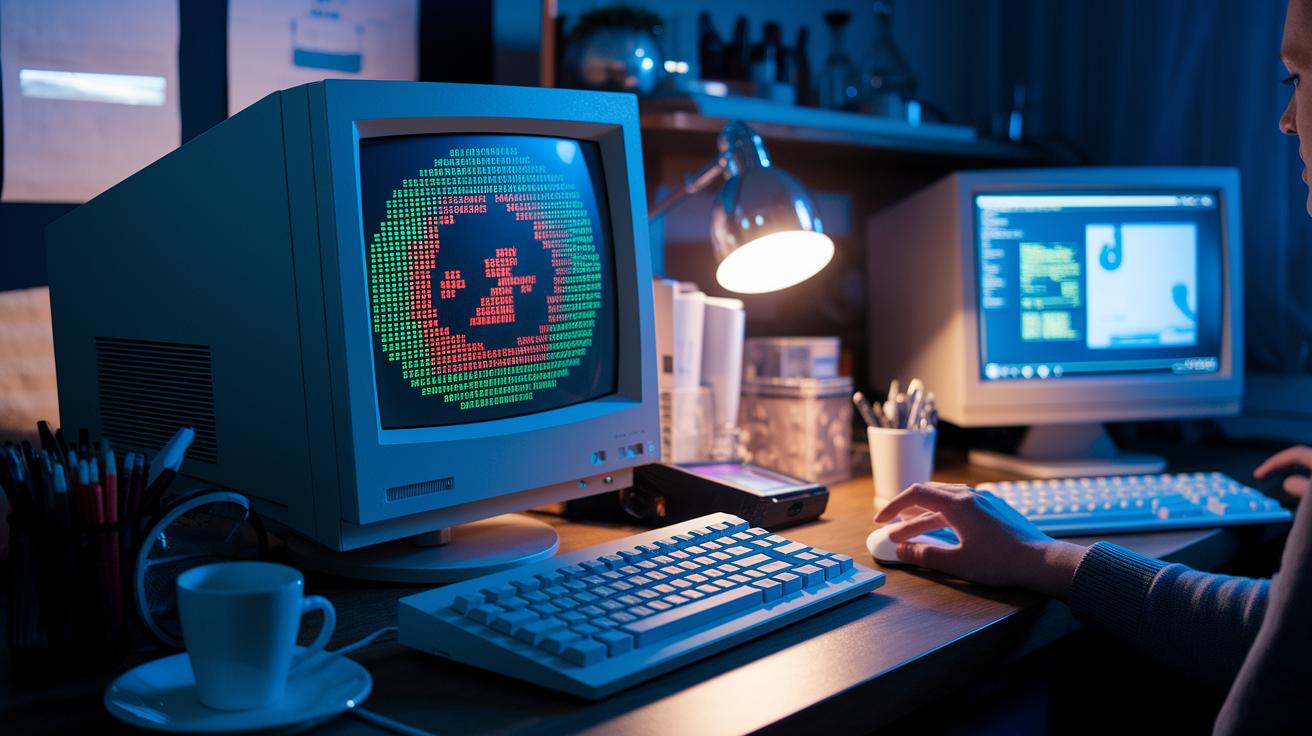
Back in the early 1980s, BBS systems kicked off online conversations in a whole new way. People typed in commands and even got creative with ASCII art to showcase their digital personalities. Fun fact: many users went the extra mile by crafting unique ASCII tags that revealed a bit about who they were. These text-only hubs were where all the chat action happened, even without any images or icons.
Then, in 1988, IRC entered the scene and switched things up. With cool nicknames, public #channels, and simple /invite commands, IRC turned basic message exchanges into a lively community affair. Imagine hopping into a channel called #funzone where everyone is greeted by creative nicknames and a flurry of text messages that felt like a real party.
Of course, text-only chats had their limits. Without images, folks had to lean on symbols like the classic ":-)" emoticon, introduced by Scott Fahlman in 1982, to show how they felt. Later on, as tech evolved, colorful interfaces and interactive visuals came along, offering a vibrant contrast to the plain simplicity of those early digital dialogues.
Graphical and Multimedia Star Chat Formats
Back in 1996, AIM introduced speech bubbles and status icons in a Windows design that truly changed the game. These nifty features transformed plain text into lively conversations, almost like watching your words come alive in a playful burst.
By the late 1990s, tiny emoji icons made their debut on Japanese mobile chat apps, quickly infusing messages with personality and humor. Picture adding a wink or smiley to your chat, it instantly brightened your conversation with a dash of flair.
Come 1999, MSN Messenger let users share photos and files right in the chat, turning everyday messages into a richer, more interactive experience. Later on, platforms like Slack took things to the next level by supporting embedded GIFs, code snippets, and smart integrations that made every chat feel dynamic and engaging.
Then in 2003, video calls broke onto the scene with Skype, making it possible to see friends and loved ones face-to-face from miles away. Soon after, WhatsApp enhanced this magic with voice notes and file attachments by 2016, building on the idea that seeing and hearing each other made digital conversation feel wonderfully real.
Evolution of Star Chat Formats: Radiant Redesign

Back in 2011, Snapchat turned heads with its new Stories feed that let moments vanish in the blink of an eye. It was like sending secret messages that disappear as quickly as a sunrise flash, making every snap feel spontaneous and magical.
Then in 2014, Slack stepped into the spotlight by introducing smart bots that handled notifications and slash commands. Imagine your chat reminders gently tapping you on the shoulder, these little helpers made work chatter feel more friendly and efficient.
In 2015, Discord completely reshaped group chats by dividing servers into dedicated topic channels and private threads. It was like moving through different rooms at an exclusive party, where casual conversation and serious discussions each got their own perfect stage.
By 2019 and 2020, Instagram and Facebook were adding that extra sparkle with augmented reality filters in live chats and video rooms. Picture chatting while a playful filter sprinkles virtual confetti around your call, turning every digital meet-up into a mini celebration.
Then, in 2020, Zoom gave its chat pane a dazzling upgrade. With features like reactions, polls, and breakout room links, boring meetings transformed into dynamic, interactive sessions, almost like having a backstage pass to instant feedback and sub-conversations.
Technical and Interface Evolution Driving Star Chat Formats
Behind the scenes, star chat formats have come a long way. Back in the day, chats used central setups like IRC servers. Then, after 2010, the tech world shifted to cloud-hosted systems that could easily handle more users. This upgrade meant less lag and smoother conversations during busy moments. And with techniques like smart routing and load balancing, handling heavy traffic became a breeze.
Next, API integration and real-time protocols took things up a notch. In 2011, WebRTC allowed browsers to support voice and video directly without extra software. Soon after, public APIs rolled out, paving the way for custom bots and deep integrations. This meant chat services became even more interactive and flexible, letting teams quickly fine-tune features as user expectations grew.
Modern front-end frameworks and clever deployment strategies have also changed the game for chat apps. Since 2015, tools like React Native have helped developers create smooth, cross-platform experiences. And when Flutter hit the scene in 2017, the push for seamless designs accelerated even more. Plus, moving to microservices and Kubernetes clusters made updates simpler and overall performance much better. These advances in both back-end architecture and front-end design have created the engaging, reliable chat environments we love today.
Future Directions in Star Chat Format Evolution

Get ready for a new era where our chat experiences get a major upgrade with immersive tech. Back in 2021 and 2022, VR and AR spaces like Meta Horizon Worlds and Microsoft Mesh started offering interactions that feel almost as real as face-to-face chats. Imagine stepping into a digital world where three-dimensional avatars mingle and holographic messages pop up right before your eyes, just like in a sci-fi blockbuster. Thanks to super-fast 5G, real-time 4K video chats on your mobile aren’t just a dream anymore, they’re practically here!
And there’s even more on the horizon. Chat apps are about to welcome AI-powered assistants fueled by GPT-3 and beyond. Picture a digital buddy who not only gets your favorite slang but also predicts what you’ll say next, keeping the conversation smooth and fun. It’s like having a backstage pass to the world of tech, making every chat feel effortlessly human.
All these exciting moves are set to blend stunning visuals with smart, responsive interfaces. In no time, our chat platforms will feel as spontaneous and genuine as a face-to-face conversation, adding that glitzy, real-life charm we all love.
Final Words
In the action, we journeyed through pivotal moments in digital communication, from early text threads to dynamic, interactive platforms. We traced how basic bulletin board systems and IRC laid the groundwork for graphical, engaging interfaces seen in today’s live chats and exclusive event coverage. Our timeline, enriched by modern technical upgrades, clearly shows the evolution of star chat formats. This evolving landscape sparks excitement for what’s next, leaving us optimistic about upcoming innovations in celebrity conversation technology.
FAQ
Q: What is a star map gift and how are star charts used in astronomy?
A: The star map gift means a personalized image showing the night sky exactly as it appeared at a special moment. Star charts bridge art and science, inspiring both decoration and learning.
Q: What is the history of star charts?
A: The history of star charts means a long evolution from ancient celestial records drawn by hand to today’s digital, interactive guides that help stargazers and researchers map the cosmos.
Q: What is the 7 star pattern called?
A: The 7 star pattern means the Big Dipper, an easily recognized star formation within Ursa Major that has guided travelers and sparked myths for generations.
Q: What are the stages of star evolution?
A: The stages of star evolution mean starting from a stellar birth in a nebula, maturing on the main sequence, expanding into a red giant, then ending as a white dwarf or exploding depending on its mass.
Q: What are the different types of stars in Astrobackyard?
A: The different types of stars in Astrobackyard mean a range from sun-like stars to giants and dwarfs, each showcasing unique temperatures, sizes, and life cycles captured in astrophotography.