


Ever wondered what really rules the world of celebrity gossip? Do you lean toward the old-fashioned tabloids with bold headlines and secret-like photos, or are you all about the quick, friendly updates from online blogs that make you feel like you're right there?
Old tabloids charm us with their dramatic stories and behind-the-scenes snapshots that feel like a private glimpse into a fancy event. Meanwhile, online blogs bring instant updates that buzz with excitement, almost like you can hear the soft murmur of a crowd before a big reveal.
Today, we’re taking a fun look at how the timeless appeal of vintage news stacks up against the energetic vibe of modern online chatter in the ultimate celebrity story showdown.
How Old School Tabloids Stack Up Against Online Blogs in Celebrity Gossip Delivery
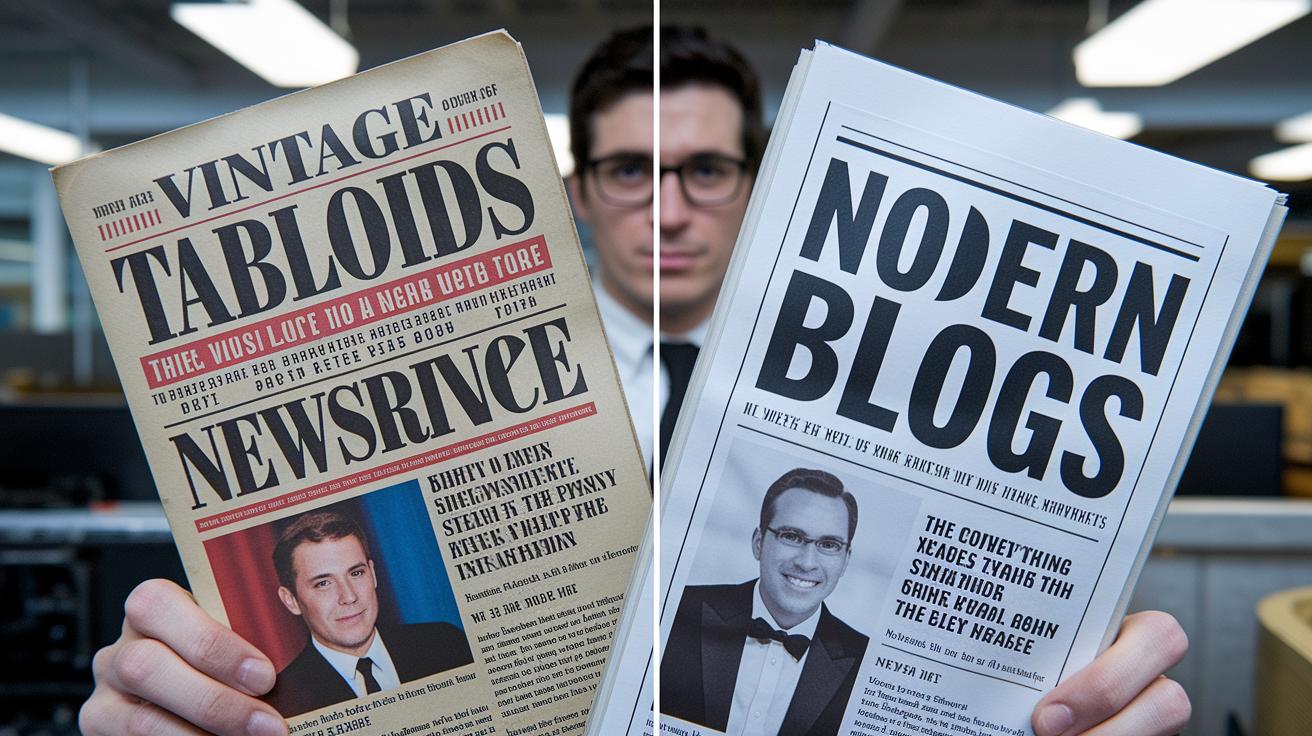
Old school tabloids got their start in a quirky twist on a pharmaceutical branding trend back in the late 1800s. They quickly moved on from offering little packets of medicine to serving up quick-hit news stories designed to grab your attention, a bit like a secret tip whispered at a backstage party. Take the Mirror, for instance; within just five years it vaulted to become Britain’s second-largest morning paper, mixing together crime scoops, puzzles, sports highlights, and juicy gossip to keep readers hooked.
On the flip side, online blogs exploded onto the scene with a fresh, lightning-fast style that feels like a live, buzzing conversation. At a 2011 SXSW talk called “The Twisted Psychology of Bloggers vs. Journalists,” speakers shared how bloggers use live audio, interactive chat channels, and rapid-fire commentary to spread the word almost as soon as it happens. This speedy delivery totally contrasts with the measured, old-fashioned approach of the classic tabloids.
Then there’s the matter of trust. Traditional journalists usually come from formal training, think places like UNC, so their stories go through lots of checks for accuracy. Meanwhile, many bloggers jump in without that same background, opting for a more spontaneous, personal take that sometimes values quick updates over deep, verified detail.
And the numbers tell the story too. In 2016, print readers spent anywhere from 37 to 50 minutes on a single issue, while digital readers only clocked in about 6 minutes a month. This clear gap underscores the ongoing face-off between the timeless charm of vintage news and the breakneck pace of today’s online gossip scene.
Old School Tabloids’ Sensational Scoop Tactics and Vintage News Narratives

Old school tabloids were all about making a splash fast. They fit a ton of drama into a small space, using bold headlines and huge photos that practically popped off the page. Imagine flipping through pages where every image grabbed you by the collar, while the punchy words whispered scandal and secrets, making you lean in closer.
British red-tops like The Sun, Mirror, Star, and Daily Record turned everyday bits into juicy gossip, while US supermarket tabloids like the National Enquirer, Globe, and Star spiced things up further with eerie political tales, supernatural claims, and even hints of UFO sightings. Their stories were like a roller coaster of shock and laughter, designed to stir up your emotions and keep you on the edge of your seat.
These vintage methods mixed old-school paparazzi tricks with classic rumor mills to create news that still thrills us today. Their spirited approach to storytelling laid the ground for the modern world of celebrity gossip, proving that a bit of extra drama can make any tale irresistibly captivating.
Online Blogs’ Digital Rumor Revolution and Modern Gossip Outlets

Earlier, we saw how blogs can break news faster than a flash. Today, though, social media steps up to mix blog posts with the nonstop buzz of Twitter and Instagram updates. And guess what? Readers aren’t just watching the story, they’re a part of it.
Online fans have jumped into the action like never before. They’re not just clicking through a post; they’re commenting, retweeting, and sharing the scoop as it happens. Imagine a blogger live from the red carpet saying, "Every tweet right now adds a fresh twist to the story."
This blend of social media and blogs turns a simple broadcast into a lively conversation. Every share and comment helps shape what comes next, making it feel like you’re part of writing the headlines.
Evaluating Credibility: Press Journalism Ethics in Print vs Web Reporting Credibility

Journalistic rules have changed a lot with the digital age. Traditional print news must now follow long-standing legal rules while online outlets mix it up with more flexible guidelines. For instance, one press agency recently defended its fact-checking process in court after online claims tried to twist the truth. One expert put it simply: "Putting truth ahead of speed is our final shield." Print media stick to strict libel laws and thorough fact-check routines, which make them very reliable. In contrast, digital news uses speedy checks like hyperlinking to original sources (see fact vs fiction: how accurate is celebrity gossip) to show they care about getting things right.
Legal rules and changing reader opinions also guide how news is reported today. Traditional press follows court decisions to protect their work, while digital reporting adapts quickly based on feedback from readers. Sometimes, missing legal protection even sparks heated debates about trust and ethical mistakes.
| Aspect | Print Media | Digital Media |
|---|---|---|
| Regulatory Oversight | Strict libel laws and formal legal rules | Flexible community standards and evolving policies |
| Verification Process | Multiple careful fact-checks and reviews | Quick links and fast cross-checking |
| Expert Testimony | Insights from seasoned journalists using proven methods | Opinions that reflect fast-moving trends and reader input |
- Traditional print journalism stays true to formal legal standards.
- Digital reporting focuses on speed while fine-tuning its review process.
- Experts say that updating ethical practices is key to today’s credibility debates.
Audience Reach and Engagement in the Old School Tabloids vs Online Blogs Rivalry

Traditional tabloids measured their clout by how many copies flew off the newsstand each week. Back in the day, readers eagerly reached for the latest issue, and that printed number told the story. Today, digital blogs flip the whole script by tracking every click, share, and comment right as it happens. Just imagine: a 2011 SXSW blog post drew 54 comments, a community buzz that classic print could only dream about.
Online platforms overflow with instant reactions. The moment a celebrity scandal drops, social media, be it Facebook, Twitter, or Instagram, amplifies every detail in minutes. This rapid feedback turns each update into a lively chat that old-fashioned letters to the editor just cannot match. Every click and share adds a spark to the electric vibe of modern gossip.
This shift in how people engage has led the industry to focus less on static print numbers and more on dynamic, detailed interaction. Bloggers now tailor their content to encourage real-time participation and whip up viral entertainment stories faster than ever.
Key engagement metrics include:
- Weekly print circulation numbers
- Page views per article
- Average time on page
- Social shares on Facebook, Twitter, and Instagram
- Comment counts and sentiment trends
The Ongoing Battle: Future Trends in Old School Tabloids vs Online Blogs Media Transformation
Old school tabloids aren’t stuck in the past, they’re spicing things up with fresh digital twists like paywalls, interactive videos, and branded podcasts that draw you in. They mix their classic reporting style with today’s tech magic to keep you in the loop, no matter how fast the news rounds the corner.
On the flip side, online blogs are stepping up their game by blending detailed, print-style stories and exclusive interviews that build trust with fans. This move towards deeper storytelling gives substance to those rapid-fire updates we all love.
Both camps are also tapping into smart AI tools that sniff out and verify rumors at lightning speed, making sure that hot news stays on point. And with more folks getting their news on mobile, push alerts and live updates are turning every tip into an immediate must-see moment.
Looking ahead, it seems these two worlds are starting to converge. Imagine the confident investigative flair of a tabloid paired with the sizzling interactivity of a blog, that’s the new recipe setting the stage for celebrity gossip. Whether you’re flipping through print or scrolling on your phone, the scoop is arriving in a refreshed, engaging way.
In the end, as both traditional tabloids and online blogs fine-tune their approaches, expect a future that perfectly blends old charm with digital savvy. Celebrity gossip is evolving into an exciting dance of tradition and innovation, always ready to surprise and delight its audience.
Final Words
In the action, we unpacked how snappy print headlines once stirred up celebrity scandals and how modern blogs bring their rapid, tech-driven spin to the gossip scene.
We've seen the shift from larger-than-life tabloid tactics to digital updates that connect in an instant.
The comparison of old school tabloids vs online blogs: the battle for celebrity gossip reminds us that these styles keep evolving, each adding its own flavor.
There’s plenty to look forward to as both sides continue to mix tech and tradition in unexpected ways.
FAQ
How do old school tabloids compare to online blogs in the celebrity gossip game?
The battle between old school tabloids and online blogs in celebrity gossip revolves around speed, style, credibility, and cultural impact. Traditional tabloids use bold headlines and curated photos, while online blogs offer rapid posts and interactive features.
What are celebrity gossip magazines called?
Celebrity gossip magazines are often labeled as red-tops in Britain or simply gossip mags in the US. They focus on sensational headlines and drama to capture reader interest.
What is a gossip blog?
A gossip blog is an online platform dedicated to celebrity news and rumors posted instantly. It engages readers with share buttons, comment sections, and a fast-paced storytelling vibe.
Why do people read gossip magazines?
People read gossip magazines for a tantalizing peek into celebrity lives, getting exclusive updates and engaging with stories that mix glamour with just a hint of scandal.